HomeBlogB.Voc in OTT Course Details: Full Form, Admission, Eligibility, Entrance Exam, Fees, Colleges, Jobs Published: May 2, 2022 | Updated: May 2, 2022 |
B.Voc in OTT Course Details: Full Form, Admission, Eligibility, Entrance Exam, Fees, Colleges, Jobs
Table of Contents
EXPLORE PROGRAMMES
Plan Your Next Academic Step
Explore programmes, eligibility criteria, and admission details at Mangalayatan University to make an informed decision about your academic future.
One of the most challenging and exciting phases of the medical field is the area of advanced surgical procedures.
Many of these require the highest tech and advanced surroundings to ensure the success of the procedures. B.Vocin Operation Theatre Technology is one of the most trending career-centric degrees for medical aspirants. B.Vocin operation theatre technology is one of the best if you want to join the healthcare industry. Operation Theatre Technicians are those who are knowledgeable with this expertise. These medical professionals are a vital component of the operation unit team. They ensure that every procedure in the operating room is as safe and successful as feasible. Their primary responsibility is to oversee the operation theatre's activity and management.
Paramedical course admission is technical and all about practical work. You will learn the basics of anatomy and physiology as well as the procedure and methodology of theatre work. You will also learn how to handle and operate hospital machines and technology. It provides the knowledge of emergency care procedures used in an operating theatre in the healthcare profession namely surgeons, dentists, doctors, specialists, anaesthesiologists, nurses and gynaecologists.
Further, in this blog, you will learn about the subject and scope of the course, eligibility criteria, admission procedure, salary, career and jobs opportunities after completing the course.
What is B.Voc in Operation Theatre Technology Degree?
B.Voc in Operation Theatre Technology course is an academic program that is offered by many colleges and universities across the globe. This course is meant for students willing to get into the field of surgery. This course is of three years duration and offers full information about the working of a surgery room, its equipment and the human anatomy. B.Vocin Operation Theatre Technology professionals are in charge of the planning and preparation that must be decided to make in the operation theatre before and after the surgical procedures are executed.
These include looking after all surgical equipment, disinfecting them, and preparing the dressing table, operation theatre table, instrument table and anaesthesia table. They also manage the medications required for surgery, as well as anaesthesia gases, drapes, and all linen, as well as their decontamination. They bring together sterile and non-sterile tools while also regulating them to ensure that they are all working properly. They also help with specialized procedures like endoscopic surgery, laparoscopic surgery, joint replacements, digital angiograms, and lithotripsy, among others.
B.Voc in Operation Theatre Technology Course Objectives
The curriculum is designed to give students a sound understanding of safety standards and practices.
The main aim of this course is to provide skills required for working in a medical environment for various medical treatments or surgeries.
The course aims at equipping students with the requisite knowledge and skills to manage theatres and ICUs in hospitals.
The students of this course will be trained in a variety of medical, surgical and administrative skills that are required to be a part of the hospital management team.
The bachelor's degree is intended to teach students various techniques used in a surgical procedure, including disinfection and sterilization.
The course will help you to understand the basic medical and surgical procedures and equip you with certain skills that you will need to apply in a real-world scenario.
B.Voc in Operation Theatre Technology: Course Highlights
Full Form
Bachelor of Vocationalin Operation Theatre Technology
Course Level
Bachelor’s
Course Duration
3 years
Eligibility
10+2 With Minimum 50 % aggregate Marks in PCB/PCM
Course Fee
INR 40K - 2 LPA
Examination Type
Semester and Annual
Admission Process
Merit Based, Entrance-Based
Average Salary After Degree
INR 5 LPA (Pay Scale)
Recruiting Companies After Degree
Bombay Hospital and Medical Research Centre, Fortis Hospital, KokilabenDhirubhai Ambani Hospital, Lilavati Hospital and Research Centre, AIIMS, New Delhi, Dr. LH Hiranandani Hospital.
B.Voc in Operation Theatre Technology Course Duration
The B.Vocin Operation Theatre course is a three-year science-based undergraduate curriculum. Over three years, the course is structured into six semesters. The course allows students to study both core and elective areas, making it incredibly flexible and diversified. Furthermore, the course provides students with the opportunity to apply their knowledge in a practical context through lab workshops. B.Vocin Operation Theatre
Technology Course Eligibility Criteria
Following are the common eligibility criteria for candidates who wish to enrol for B.VocinOperation Theatre Technology Course-
Students must pass the 10 + 2 examination in science, which includes Physics, Chemistry, and Biology as mandatory subjects.
They must obtain at least a 50 % aggregate score in 10+2 from a recognized board.
Students must take the entrance examinations held by the respective colleges and meet the cut-offs for that specific course.
A good performance in the personal interview is also required for admission.
The course requires a minimum age of 17 years to apply.
B.Voc in Operation Theatre Technology Admission Process
Admission to the B.Vocin Operation Theatre Technology course is quite identical to that of other B.Voccourses. Candidates must understand and focus to meet the prerequisites of the B.Voc in Operation Theatre Technology course. Admission is based on the results of the entrance exam or direct admission based on the marks obtained in the 10+2. Students can apply for admission by going to the college's official website online or offline by visiting the college.
B.Voc in Operation Theatre Technology Course Fees
The fees for a B.Vocin Operation Theatre Technology course range from INR 40K - 2 LPA. This fee is variable and can vary depending on a variety of factors such as geographical location, academic staff, infrastructure, and many others.
B.Voc in Operation Theatre Technology: Subject & Syllabus
B.Vocin Operation Theatre Technology is a 3-degree program that requires in-depth knowledge of operation theatre technology as well as practical experience.
The complete B.Voc in Operation Theatre Technology syllabus is listed in the table below:
.
First Year
Second Year
Third Year
Physiology
Medicine Outline
CSSD Procedures
Principles of Management
Basic Anesthetic techniques
Basics of Surgery
Pathology
Applied Anatomy and physiology
Regional anesthetic techniques
Basics of Computer
Clinical Pharmacology
-
Anatomy
Principles of Anesthesia
-
-
Medical Ethics
-
B.Voc in Operation Theatre Technology: Specialization Since this is a specialized degree course, you will have the chance to do a lot of hands-on work in the operating theatre. You might get to scrub for minor surgeries, assist in operating on major organs or even take on the role of anaesthetist and stay at the bedside throughout the operation. Following are the specialization one can opt for-
Physiotherapy
Pharmacology
Radiology
Clinical Surgery
Ophthalmology
Anaesthesia and Critical Care
Nursing
Urology
General medicine
Salary After B.Voc in Operation Theatre Technology Course in India
According to PayScale, a B.Vocin Operation Theatre Technology graduate can expect to earn INR 5 LPA on average. This salary is determined by a variety of variables, including the amount of job experience students acquire, their educational qualifications, and where individuals reside.
B.Voc in Operation Theatre Technology Future Scope in India
The B.Vocin Operation Theatre Technology is a cutting-edge skill-based course in the Allied Biomedical Sciences realm. The advancement of surgical procedures and the emergence of key technologies have necessitated the need for trained and competent professionals to assist the doctor's or specialist's team. Operation theatre technologists have a broad variety of opportunities to assist surgeons in surgical units affiliated with healthcare institutions, corporate and government hospitals in India and overseas.
Highlighting the scope for B.Voc in Operation Theatre Technology professionals in India
OT technologist is one of the highest-paid jobs. It is considered a challenging job as it requires work in difficult conditions and very long hours and it is a physically demanding job. There are many government hospitals, private hospitals and clinics which require the services of OT Technicians/Technologists on regular basis. Hence, job prospects are plenty and plentiful in this field. The most common work opportunities are in airports, factories, oil refineries and other manufacturing places.
In Government, there are various State Government and Central Government Health Institutions where B.Vocin OT Technicians are employed as OT technicians. However, since the employment opportunities in the government are endless, the pay and job security are much better. And as far as the government sector is concerned, there is a lot of scope for us as well because government work is never-ending, there is always room for improvement. On the other hand, in Private Sector, there are a large number of Private Hospitals and Ambulatory care centres whereB.Vocin OT Technicians are employed. You can choose the scope based on your interest and qualification.
Career or Jobs Opportunities after B.Voc in Operation Theatre Technology Degree
B.Vocin Operation Theatre Technology Course Duration is one of the most lucrative courses and the students after completing their course can opt for a career in teaching, and research or can also opt for a career in the field of healthcare. Mentioning the career opportunities after completion of the course-
Lab Technician
Lab technicians hold a very important role in any medical environment. The lab technician is extremely important to the doctor and his or her staff. A lab technician is responsible for ensuring that the lab is running smoothly and efficiently. They maintain and handle the lab operations. Laboratory technicians often assist the doctor with diagnosing conditions, determining the source of a patient's illness, and developing a treatment plan.
Anaesthetist Consultant
The responsibilities of an anaesthetist consultant vary by speciality and vary by country. Anaesthetists are the doctors who administer anaesthesia and monitor a patient's condition during surgery. They are the ones keeping a patient safe while the surgeons are cutting the body open and treating the illness. During an operation, they are responsible for supplying the proper level and dosage of anaesthesia to the patient. Anaesthetists are often the unsung heroes when it comes to surgeries as they are usually behind the scene.
Associate Consultant
As an OT Associate Consultant, you will learn how to support the OT department and help with OT procedures and patient care. Client services are their primary responsibility.
OT technician
The OT professionals are considered the backbone of the system. The operation theatre technician is responsible for the smooth and proper running of the operation theatre. He or she should aware of the procedures to be followed before and after the operation to prevent any untoward cases. Also, they are responsible for the cleanliness and safety of the operation theatre, must be able to monitor the surgery room to make sure that the equipment and the room are safe and monitor and maintain the temperature, humidity and pressure of the operation theatre.
Perfusionist
A perfusionist is someone who is in charge of all the machines in an operation. A perfusionist ensures that all of the equipment, tools and machines in the operating theatre are in place and in running condition. Perfusionists supervise technical maintenance in the occurrence of equipment failure and guarantee that the patients' lives are not risked. How to Choose Top B.Voc in Operation Theatre Technology College?There are many good B.Vocin Operation Theatre Technology colleges in India, but choosing the top among them is a little bit difficult task. You can read a few articles on the internet as well as ask some of your friends or relatives. However, if you are looking for the best OT college in India then you can read here a few attributes for which OT colleges are best. These attributes are as follows:
Accreditation & Recognition
College Infrastructure & Teaching Approaches
Faculties & Educational Resources
Clinical Training
Internship & Placement Support
Top Companies Hiring B.Voc in Operation Theatre Technology Graduates
Hospitals and healthcare institutions employ the bulk of operation theatre techs. As a technologist, they may have the opportunity to work in operating rooms, hospital emergency departments, and intensive care units (ICUs). Here are the top recruiters hiring B.Vocin Operation Theatre Technology professionals-
Fortis Hospital
Max Healthcare
Bombay Hospital and Medical Research Center
Lilavati Hospital and Research Center
KokilabenDhirubhai Ambani Hospital and Medical Research Center
Dr. LH Hiranandani Hospital
AIIMS (All India Institute of Medical Sciences), New Delhi
Manipal Hospital
Benefits of Pursuing B.Voc in Operation Theatre Technology Course
For aspirants, a B.Vocin Operation Theatre Technology is a beneficial and lucrative job path. The course provides students with all of the necessary skills for establishing a successful profession. Students will learn about surgical science, medical surgery technology, and more in this course.
This program's candidates are in high demand in the job market because the knowledge and skills they obtain during their education are extremely valuable. Graduates who are familiar with all of the essential technical components of surgical units are needed in hospitals all around the globe. As a result, there is a high demand for graduates of this course.
This course is quite demanding, and graduates will have a lot of future opportunities after course completion. As you will have the opportunity to work under the supervision of doctors, nurses, anaesthesiologists, and other junior doctors.
Therefore, the benefits are as follows-
Skyrocketing demand for skilled professionals
Excellent earning potential
A noble profession making a difference in the society
Exciting internship scope
Wide avenues of employment
Guarantees secured future
Enhancement of personality and technical as well as interpersonal abilities
Foundation for higher education like MSc or PhD
Required Skills for B.Voc in Operation Theatre Technology Course
Graduates of the B.Vocin Operation Theatre program should have a variety of abilities to ensure a successful career. These abilities assist students in ensuring that when they enter the workforce, they thrive in the environment and do not fail to meet their responsibilities.
Some of these abilities are:
Organization skills
Quick to respond
Listening skills
Knowledge of operation theatre equipment
Patience
Communication skills
Care for patients
Observation skills
Analytical skills
Critical Thinking
Attention To Details
Hands-on experience with equipment
B.Voc in Operation Theatre Technology: Related FAQs
Q1 - What is the best option after B.Voc in Operation Theatre Technology?
There are many options for you to pursue after you complete your op-tech degree. Many people find that operations theatre nursing is just the beginning of their career. As an OT Technician, you will be mainly assisting the Surgeon and the Anaesthetist in their respective duties. Also, you can start your own private OT clinic. You can become an OT consultant.
Q2 - Is B.Voc in Operation Theatre Technology easy or hard?
Simply put, the course is not easy, but not hard either. It demands concentration and hard work. The theory is quite tough, so you need to read the book many times and practice the case studies. Therefore, it is a hard job, but it is not that hard if you are committed and passionate about it. You should have an interest in the medical field.
Q3 - Is B.Voc in Operation Theatre Technology a good career?
Well, the answer depends upon what you want in your career. If you want career security, good pay and make a decent living, then it is a good course. Apart from work and money, you need to be passionate about your job as you will be operating people's lives and saving them.
Q4 - How many years is B.Voc in Operation Theatre Technology?
The duration of the B.Vocin Operation Theatre Technology course is 3 years.
Q6 - Is NEET required for admissions to the B.Voc in Operation Theatre Technology course?
Admission is usually merit-based, but some colleges consider the score obtained in the NEET exam.
Key Takeaway
Pursuing a purse B.Vocin Operation Theatre Technology course or pursuing an Operation Theatre Technology course can be a very thrilling experience. It can improve your knowledge about the functioning of a hospital, and help you understand how to handle critical situations and how to help people in need. It can teach you the importance of being a professional and how to keep the best interest of the patient in mind.
It can also equip you with the necessary skills and tools required to pursue a career in this field. Pursuing an online course from a reputed institute is yet another way of pursuing a professional career. There are many renowned institutes that you can choose to make the best use of your talent and skills.
If you are looking for a career in Operation Theatre, you can please fill out an application form here: www.mangalayatan.in
We hope that you have found this article helpful and informative. If you have any admission related questions or concerns, please feel free to contact us anytime.
Thank you for reading and we wish you the best of luck in your future career!
ADMISSION OPEN
Unlock Your Potential with World-Class Education
Choose from diverse programs designed to prepare you for global opportunities. Your future begins here.
MSc Biotechnology offers job prospects in fields related to biotechnology, pharmacy, medicine, laboratory research, diagnostics, and health care. This program builds up knowledge and skills in biological sciences. After completing the program, students can either join the industry or pursue further education depending on their personal choice.
What Can You Do After MSc Biotechnology?
Once you pass MSc in Biotechnology, the list of jobs available to you includes Research Labs, Pharma Industries, Bio-Tech Industries, Diagnostic and Clinical Research Companies. You can establish your career as a Lab Tester, Research Scientist, Quality Auditor, Clinical Research Professional and Bio-informatician.
Those who wish to gain further knowledge can opt for a Ph.D. in molecular biology, bioinformatics, clinical research, or any other similar subject to increase their level of knowledge and increase their career opportunities.
Career Options After MSc Biotechnology in India
Some common career options after MSc Biotechnology include:
Job RoleKey Work Area
Biotechnologist
Biotechnology research and development
Research Associate
Laboratory research and experiments
Clinical Research Associate
Clinical research activities
Quality Control Analyst
Testing and quality checks
Bioinformatics Professional
Biological data analysis
Biotechnology Laboratory Professional
Laboratory testing and sample analysis
Biotechnologist
A biotechnologist applies biological knowledge and laboratory techniques to research, development, and production-related activities in life-science industries.
Research Associate
Researchers\' assistants assist researchers in conducting scientific experiments through observation, analysis, and documentation of findings.
Read Also - MSc Biotechnology Course Details: Full Form. Admission, Eligibility, Duration, Fees, Colleges, Jobs
Clinical Research Associate
Clinical research associates assist clinical trials through the documentation and coordination of clinical studies based on the project needs.
Quality Control Analyst
Testing and documentation are carried out by quality control analysts to guarantee that the required standards of quality are met.
Bioinformatics Professional
Bioinformaticians make use of computer-based techniques and biological information for purposes of analysis and research. It is important to learn about data analysis and software used in the field.
Biotechnology Laboratory Professional
Laboratory professionals deal with sample handling, instrumentation, testing techniques, and documentation. Laboratory practicals play a vital role in such professions.
Higher Studies After MSc Biotechnology
In case you are looking for further studies or an academic career, you can pursue a PhD after MSc Biotechnology. You can also have specialization in certain domains like bioinformatics, molecular biology, clinical research and data analysis.
Read Also - Build a Career in Biotechnology with Mangalayatan University
Skills to Develop After MSc Biotechnology
Aside from your academic qualifications, learning skills and professional skills could increase your career prospects. Some vital skills are:
Laboratory and experimental techniques
Research methodology and scientific writing
Data analysis and basic bioinformatics
Scientific documentation
Quality-control practices
Communication and presentation
Analytical and problem-solving abilities
MSc Biotechnology Salary and Career Growth in India
MSc Biotechnology Salary In India is dependent on Experience, designation, organization, place of work, and specialization. A fresher will have an entry-level designation, but with experience and learning, he/she can progress towards specialization/senior designation.
Career StageMain Growth Factors
Fresher
Qualification, skills and practical exposure
Early Career
Experience and specialisation
Mid Career
Expertise and project responsibility
Senior Level
Leadership and specialised knowledge
Salary should therefore be viewed as a variable range rather than a fixed amount.
Government and Private Jobs After MSc Biotechnology
Government Jobs After MSc Biotechnology: In research organisations, laboratories, and educational institutes, government jobs are released based on recruitment notifications and eligibility criteria. There are also private sector biotechnology jobs, quality-control jobs, diagnostic jobs, and roles in pharmaceutical manufacturing plants.
Research and Career Opportunities in Biotechnology
It offers excellent opportunities for individuals with laboratories and research facilities in many fields where biotech can be used: healthcare, medicine/ pharmaceuticals, agriculture, diagnostics, environment, research, etc.
Read Also - List of Top Biotechnology Colleges in Aligarh, UP
Why Choose Mangalayatan University Aligarh for Biotechnology?
Mangalayatan University offers a two-year M.Sc. Biotechnology programme through its Department of Biotechnology & Life Sciences. According to the university, the department focuses on teaching, training, and research and provides laboratory facilities and experienced faculty. The university also highlights seminars, workshops, conferences, and training activities as part of departmental activities.
Conclusion
A career after an MSc in Biotechnology includes various options in fields such as research, pharma, healthcare, clinical research, labs, and the biotech industry. They can increase their chances of a good career through acquisition of skills, practical experience, and specialization in the right field. In case they have a knack for advanced research, they can also consider pursuing a PhD in biotechnology.
Frequently Asked Questions
What can I do after MSc Biotechnology?
You can be engaged in biotechnology, pharmaceutical, clinical research, quality control, diagnostics, labs, and bioinformatics. You can do your PhD also.
Can I get a job after MSc Biotechnology?
Yes. Graduates can apply for jobs as research scientists in laboratories, biotechnology firms, pharmaceutical companies, and clinical research facilities.
Can I pursue a PhD after MSc Biotechnology?
Yes, since it is possible for students to undertake PhD research programs provided that they satisfy the requirements set by that particular institution.
What is the salary after MSc Biotechnology?
Pay depends on a lot of things, such as experience, profession, organization, work environment, and specializations. There is no fixed remuneration that applies to all MSc Biotechnology students.
Which skills are useful after MSc Biotechnology?
Laboratory methods, research ability, data analysis, bioinformatics, scientific writing, and problem-solving abilities are important in biotechnology.
A Diploma in Pharmacy (D.Pharm) is a two-year pharmacy programme that offers a general understanding of the aspects of pharmaceutical science, medicines, and pharmacy practice. Upon completing the course, a D. Pharm graduate can look for opportunities to work in pharmacies, hospitals, pharmaceutical companies and other healthcare providers. Students can opt B. Pharm as well as other full time d pharm courses. Know yourself and follow your passion.
What Can You Do After D.Pharm?
D. Pharm job availability: There are many areas where you can find a job in the pharmaceutical field, i.e. a community, hospital, pharmaceutical companies and other medical and healthcare organisations. Some of the common jobs are pharmacy assistant, medical representative, pharmaceutical sales executive, hospital pharmacist and many more. For those who wish to acquire a higher level of education, B. Pharm through lateral entry based on the relevant entrance requirement.
Career Options After D.Pharm in India
The career options after D.Pharm are employment in the fields of pharmacy, hospital pharmacy, pharma sales and healthcare services.
Job RoleWork Area
Pharmacist
Dispensing medicines and pharmacy services
Hospital Pharmacist
Hospital pharmacy and medication support
Community Pharmacist
Retail and community pharmacy
Medical Representative
Pharmaceutical product promotion
Pharmacy Assistant
Pharmacy operations and support
Pharmaceutical Sales Executive
Sales and customer relationships
Pharmacist
Pharmacists use medicines and assist patients by providing them with medicines and relevant guidance regarding their use, within the limits of their practice and the guidelines.
Read Also - D Pharma Course Details: Full Form, Admission, Eligibility, Entrance Exam, Fees, Colleges, Jobs
Hospital Pharmacist
Hospital pharmacists operate in hospitals and are involved with hospital pharmacy and medicines related services. They are involved in medicines management, quality control, medicines logistics, and various other activities.
Community Pharmacist
Pharmacists who work in a community, or retail, pharmacy are normally engaged in the sale of medicines, storage, and responding to customer questions.
Medical Representative
Medical representatives look after the promotion of a medicine and maintaining good relationships with healthcare professionals.
Pharmacy Assistant
Pharmacy Assistants are responsible for the administration of everyday pharmacy work, such as stocks, organising medicines and offering support with the day-to-day work in the pharmacy.
Pharmaceutical Sales Executive
Pharmaceutical Sales Executives have the role of selling pharmaceutical products, establishing consumer relationships and achieving sales targets.
Higher Studies After D.Pharm
Another higher study after D.Pharm is B.Pharm by lateral entry. B.Pharm lateral entry eligibity and admission to the third semester is presently offered at Mangalayatan University for students who qualify in D.Pharm and 50% marks.
Apart from this, the students can also opt for any other course related to pharmacy as per their eligibility.
Skills to Develop After D.Pharm
In addition to the knowledge of pharmacology, students can learn skills that would help them perform well at work. They include:
Medicine and prescription knowledge
Communication and patient interaction
Inventory and record management
Basic computer skills
Pharmaceutical terminology
Attention to detail
Professional and ethical conduct
Read Also - B Pharmacy Course Details: Subjects, Eligibility, Admission, Career Scope, Job Opportunities & Salary
D.Pharm Salary and Career Growth in India
D. Pharm Salary in India: The salary in India for D. Pharm depends on the employee and the job roles, locations, employers, skills, etc. Generally, the freshers work at entry levels jobs, and experience and a little bit of additional qualification can help you reach to a better position.
Career StageFactors Affecting Growth
Fresher
Qualification, skills and job role
Early Career
Experience and workplace knowledge
Mid Career
Specialisation and responsibility
Advanced Career
Expertise, leadership and higher qualifications
Therefore, there is no single fixed salary after D.Pharm for every graduate.
Government and Private Jobs After D.Pharm
Vacancies for Government jobs after D. Pharm: Employment opportunities for government jobs after D. Pharm can come from hospitals, healthcare departments, and other public sector institutions, as announced in recruitment notices and based on eligibility.
D. Pharm jobs can also come from private-sector organisations like pharmacies, hospital plants, pharma companies and marketing, as well as healthcare-related organisations.
Prospective applicants should always check the eligibility and registration need in each job advertisement.
Begin your Career Journey with Pharmacy Program
Career Opportunities in the Pharmaceutical Industry
Once D. Pharm graduates open themselves to job options like:
Pharmacy Operations: Work in retail, community or hospital pharmacies.
Pharmaceutical Sales: Build careers in medical sales and product promotion.
Manufacturing: Help with pharmaceutical manufacturing activities.
Quality Control: Help with testing and documentation.
Healthcare Services: Work in hospitals and other healthcare organisations.
Read Also - Pharm D Course Details: Full Form, Eligibility, Fees, Admission, Top Colleges and Scope
Why Choose Mangalayatan University for Pharmacy Studies?
D.Pharm and B.Pharm programmes are offered under Mangalayatan University School of Pharmacy at Mangalayatan University. The university has mentioned that the school has laboratory facilities, faculty with experience, and opportunities for students to attend conferences and training activities. It aims at research and skill development in the field of pharmaceutical sciences.
At present, the university lists D. Pharm as a two-year programme and B. Pharm lateral entry as a three-year programme.
Conclusion
Your career after D. Pharm includes pharmacy and hospital work, pharmaceutical companies and employment in a related healthcare field. By gaining employment in the pharmacy industry, gaining experience and skills, and applying to study a B. Pharm via a designated qualification route, you can improve your career prospects in the future. Find what interests you in order to follow a career in pharmacy.
FAQs
What can I do after D.Pharm?
After D.Pharm, you can join pharmacy stores, hospitals, pharma sales, healthcare institutions, or opt for B.Pharm via lateral entry.
Can I get a government job after D.Pharm?
Certainly, you are eligible to apply for government pharmacist positions provided that you fulfil certain requirements.
Can I pursue B.Pharm after D.Pharm?
Yes, eligible D.Pharm graduates have the option to enrol in B.Pharm via lateral entry as per admission criteria.
What is the salary after D.Pharm?
The salary of D.Pharm depends upon your job profile, experience, company, place, and other qualifications as well.
Which skills are important after D.Pharm?
The skills of pharmacological expertise, communication, drug handling, inventory control, and attention to detail are essential.
Can I work in a pharmaceutical company after D.Pharm?
There are some sales, operations or support-related positions in the pharmaceutical industry that you may be able to qualify for. Qualifications for manufacturing, quality control, research and other technical jobs depend upon the employer and may include other requirements.
How long does B.Pharm lateral entry take after D.Pharm?
The B.Pharm lateral entry programme is generally a three-year programme in which an eligible candidate is admitted to the third semester. Ensure that the programme structure is as it is now before applying.
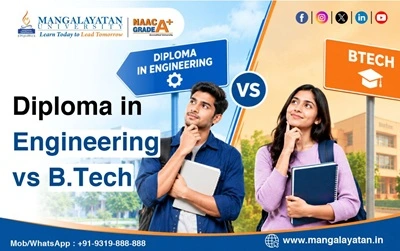
Students who are interested in a technical career in the fields of technology, manufacturing, construction and the like will want to make an informed decision when choosing their engineering qualification. There are two most common courses, Diploma in Engineering and a Bachelor of Technology (BTech). There are differences between both in terms of the courses taught, job prospects, length, and eligibility, but they both provide technical knowledge and lead to engineering-related careers.
It may be said, in general, that a Diploma in Engineering course is suitable for students who want to pursue any technical course after class 10 Board exams and BTech is a 4-year engineering course after class 12 Board exams. Candidates who have completed the diploma course may also be eligible to enter into second year of BTech course by lateral entry.?
It will be useful to understand the differences between these qualifications when deciding on a course that suits your education, financial situation, learning style and future career objectives.
Diploma in Engineering vs BTech: Key Differences
Comparison FactorDiploma in EngineeringBTech
Qualification
Engineering diploma
Undergraduate engineering degree
Typical eligibility
Class 10 or other suitable entry route.
Class 12 (prescribed subjects) or an eligible lateral entry option.
Course duration
Typically 3 years following the completion of Class 10
Typically 4 years after Class 12
Learning approach
Basic engineering knowledge and application of technical skills.
Engineering theory, design, analysis, projects and practical learning.
Common specialisations
Civil, Mechanical, Electrical, Computer Engineering, and other available branches
Computer Science, Civil, Mechanical, Electrical, Electronics, and other available branches
Career opportunities
Technician and maintenance, production and other eligible technical roles
Graduate engineer, design engineer, software developer and other relevant graduate positions.
Higher education
BTech (Lateral Entry) and other related programmes (where available)
MTech, MBA, other post graduate programs
Fees
Depend on the institution and programme
Depend on the institution, branch, and programme
What Is a Diploma in Engineering?
The Diploma in Engineering is a technical course that mainly involves the development of engineering knowledge and skills. It acquaints learners with engineering basics, equipment, tools, and their applications in the industry.
Common Diploma in Engineering specialisations include:
Mechanical Engineering
Civil Engineering
Electrical Engineering
Computer Engineering
Electronics Engineering
Automobile Engineering
Read Also - List of Best Diploma Engineering Courses After 10th in India
Course Duration and Eligibility After Class 10
A Diploma in Engineering is typically a course that is completed within three years after passing Class 10. Diploma courses are available to students who have passed Class 10 from any recognized board, provided that they fulfill the eligibility requirements of the concerned institution.
Subjects and Practical Skills
This curriculum consists of the study of basic engineering subjects combined with lab experiments, workshops, technical drawing, and projects. The students learn practical skills associated with the handling and operation of machinery. It may serve to train students for technician and other entry-level technical jobs.
What Is a BTech Degree?
BTech, or Bachelor of Technology, is an engineering undergraduate degree that enables students to have a comprehensive knowledge of various aspects related to engineering concepts, science, design, and technology.
Popular BTech specialisations include:
Computer Science Engineering
Mechanical Engineering
Civil Engineering
Electrical Engineering
Electronics and Communication Engineering
Artificial Intelligence and related computing fields
BTech Course Duration and Eligibility After Class 12
The duration of a BTech course is usually four years after class 12. Candidates usually have to complete Class 12 in Physics, Maths, and other subjects as per requirement. Admission may be on the basis of an entrance test, merit, or any other valid method of selection.
Subjects and Technical Knowledge
The BTech programs comprise theory-based learning, technical subjects, practicals, internships and engineering projects. The students get to learn problem analysis, problem solving and development of systems using their technical knowledge.
Diploma in Engineering vs BTech: Fees, Career Options and Salary
Although both programmes prepare students for technical careers, their educational approaches and qualification levels differ.
Diploma in Engineering vs BTech: Course Duration
A diploma in engineering is completed within three years after Class 10, while a B.Tech can be accomplished within four years after Class 12. In case of BTech by lateral entry after diploma, the degree can be earned within three years.
Diploma in Engineering vs BTech: Eligibility Criteria
The diploma can be accessed by the students even after Class 10, thus making it a course that is apt for individuals who wish to undertake technical education at an early age. While BTech needs Class 12 along with specific science subjects, the diploma students can pursue their second-year BTech program through lateral entry.
Diploma in Engineering vs BTech: Course Fees
The cost of studying in diploma courses could be lower due to the shorter period of study as well as the fact that such programs are offered in public and private polytechnic institutions. The amount of money required for the study of BTech varies from one institution to another based on several factors.
Diploma in Engineering vs BTech: Career Opportunities and Salary
Those with a diploma may be hired into positions such as technicians, junior engineers, maintenance engineers, production or supervisory support staff, while those with a BTech may get to work as graduate engineers, software developers, designers, analysts, and technical managers.
Jobs After a Diploma in Engineering
Common career options for diploma holders include:
Engineering Technician
Maintenance Technician
Production Technician
CAD Technician
Quality Control Technician
Electrical Technician
Civil Site Supervisor
Technical Support Executive
Service and Repair Technician
Junior Engineer, where eligible
Career Opportunities After BTech
BTech graduates may explore career opportunities such as:
Graduate Engineer Trainee
Design Engineer
Mechanical Engineer
Civil Engineer
Electrical Engineer
Software Developer
Systems Engineer
Quality Engineer
Data Analyst
Project Engineer
Read Also - BTech Course Details, Full Form, Eligibility, Duration, and Career
Salary After Diploma in Engineering vs BTech
The amount of salary received will depend on the branch of engineering, location, company, experience, and technical skills of an individual. A BTech degree can create more possibilities, but it does not guarantee increased salary in all cases.
Diploma in Engineering vs BTech: Which Course Is Better After Class 10 or 12?
The better option depends on your educational stage, learning preferences, financial circumstances, and long-term career plans.
Is a Diploma in Engineering Better After Class 10?
A diploma can be a suitable choice for students who want to enter technical education immediately after Class 10. It provides early exposure to engineering applications and may help learners begin working sooner. It also offers a pathway to higher qualifications through lateral-entry admission to BTech programmes.
Is BTech the Right Choice After Class 12?
BTech can be a good option for students who have completed Class 12 with the required subjects and want comprehensive engineering education. It is particularly relevant for those interested in engineering design, software development, research, advanced technical roles, or postgraduate studies.
Can You Pursue BTech After a Diploma in Engineering?
Yes. Diploma holders can apply for BTech lateral-entry admission at institutions that offer this route. Lateral entry allows eligible candidates to enter the second year of a BTech programme, reducing the time required to complete the degree.
BTech Lateral Entry After a Diploma
Lateral entry provides an opportunity for diploma holders to build on their existing technical knowledge and earn an engineering degree. It can improve access to graduate-level engineering roles and further education opportunities.
Eligibility for BTech Lateral Entry Admission
Applicants generally need a recognised engineering diploma in a relevant branch, with the minimum marks specified by the institution or applicable admission authority. Branch compatibility, entrance examinations, and other conditions may apply. Students should check the current admission rules in their state and chosen university.
Begin your Career Journey with Engineering Program
Career Opportunities After a Diploma in Engineering vs BTech
Both qualifications can lead to technical careers, although the roles available depend on the qualification requirements of individual employers.
Jobs After a Diploma in Engineering
Common career options include:
Engineering Technician
Junior Engineer, where eligible
Maintenance Technician
Production Technician
CAD Technician
Quality Control Technician
Electrical Technician
Civil Site Supervisor
Technical Support Executive
Service and Repair Technician
Career Opportunities After BTech
BTech graduates may explore roles such as:
Graduate Engineer Trainee
Software Developer
Design Engineer
Mechanical Engineer
Civil Engineer
Electrical Engineer
Data Analyst
Quality Engineer
Systems Engineer
Project Engineer
These are potential career paths rather than guaranteed job outcomes. Some positions require additional certifications, specialised skills, professional registration, or relevant experience.
Read Also - List of Best Engineering Colleges after 12th in Aligarh, Uttar Pradesh
Higher Education Options After Diploma in Engineering and BTech
After a diploma, students can pursue BTech through lateral entry or consider relevant advanced diplomas and certifications. After BTech, graduates may pursue MTech, MBA, postgraduate programmes in specialised technical fields, or research degrees, depending on eligibility. Professional certifications can also help learners develop expertise in areas such as cloud computing, data analytics, cybersecurity, and project management.
Diploma in Engineering vs BTech: Which Course Should You Choose?
Diploma in Engineering would suit those who seek immediate technical training and learning as well as an opportunity for either join the job market or pursuing higher education after completion of Class 10th. A BTech degree is ideal for students who wish to pursue an engineering degree course after Class 12th.
Compare course costs, eligibility, syllabus, accreditation, facilities, and career prospects before making a choice. Consider your preferred engineering stream and whether you intend to join the work force immediately or pursue a degree course.
In conclusion, both paths could prove beneficial to an individual\'s career in engineering. It all depends on your educational level, financial status, and career plans.
Why Choose Mangalayatan University for Engineering?
Mangalayatan University Aligarh is a leading university in Uttar Pradesh that provides engineering courses which aim to impart technical knowledge and skills. Students are able to explore the fields of engineering in which they are interested and which support their career plans. The university emphasizes learning, technical development and job preparation. Students should first check the programmes offered and the eligibility criteria and fee before they apply. Make a sound choice of engineering programme at Mangalayatan University to make a step towards your career goals.
(FAQs)
1. Which is better, a Diploma in Engineering or BTech?
The choice depends on your goals: a diploma offers early technical training, while BTech provides a comprehensive engineering degree.
2. What is the difference between a Diploma in Engineering and BTech?
A diploma focuses on practical technical skills, while BTech combines advanced engineering theory, design, and practical learning.
3. Can I do BTech after completing a Diploma in Engineering?
Yes, eligible diploma holders can pursue BTech through lateral entry, subject to admission requirements.
4. Which course is better after Class 10: Diploma or BTech?
A diploma is an option after Class 10, while BTech generally requires completing Class 12 with the prescribed subjects.
5. Is a Diploma in Engineering equivalent to a BTech degree?
No, a diploma and a BTech are different qualifications with distinct academic levels and eligibility requirements.
6. Which offers better career opportunities, Diploma or BTech?
BTech may provide access to a broader range of graduate-level engineering roles, while diploma holders can pursue technical and technician-level positions.
7. Can diploma holders get lateral entry admission to BTech?
Yes, eligible diploma holders can apply for direct second-year BTech admission at institutions offering lateral entry.